Loading...
Serving Alameda, CA and surrounding areas. (341) 895-9185
Alameda Masonry & Concrete is the masonry contractor serving Hayward, CA with foundation repair, retaining wall construction, and brick restoration on the city's postwar flatland bungalows and hillside properties. We know Hayward's expansive clay soils, Hayward Fault seismic conditions, and city permit process - and we respond within one business day.
Alameda Masonry & Concrete is the masonry contractor serving Hayward, CA with foundation repair, retaining wall construction, and brick restoration on the city's postwar flatland bungalows and hillside properties. We know Hayward's expansive clay soils, Hayward Fault seismic conditions, and city permit process - and we respond within one business day.
Hayward's expansive clay soils are one of the leading causes of foundation cracking in the city, as the ground swells in wet winters and contracts in dry summers, putting constant stress on foundation walls in homes built from the 1940s through the 1970s. Our foundation repair work addresses both the cracked masonry and the drainage conditions driving the movement, so the repair holds rather than reopening within a few seasons.
Homes in the Hayward Hills sit on sloped lots where retaining walls and terraced yards are common, and many of those walls were built decades ago without adequate drainage weep holes or gravel backfill. When hydrostatic pressure builds up behind an undrained wall over wet winters, the wall cracks, bows, and eventually fails - and the repair has to fix the drainage problem, not just the wall face.
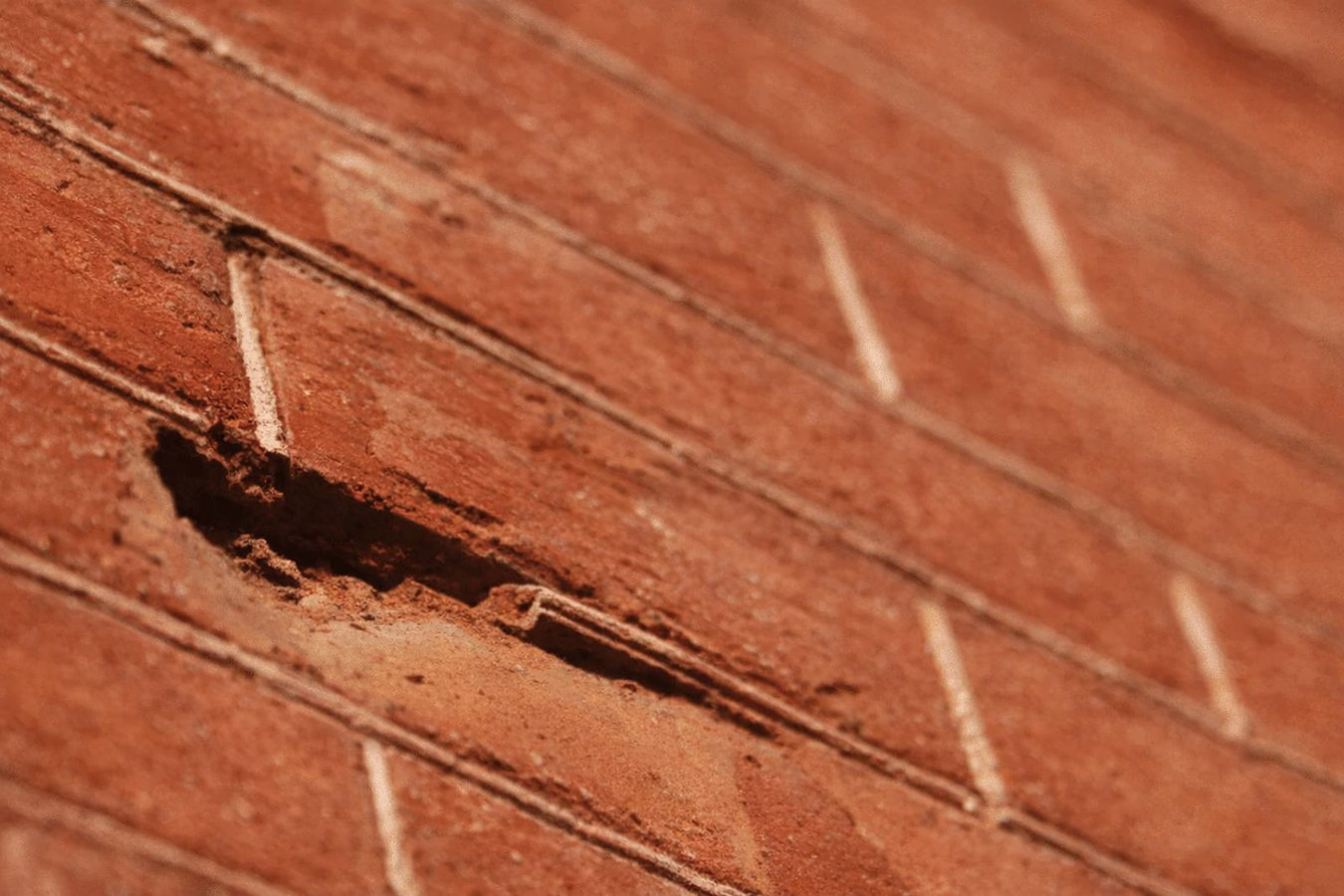
Many of Hayward's older homes have original brick chimneys, garden walls, and foundation details built with softer lime-based mortars. The Hayward Fault runs directly through the city, and even small tremors open new cracks in aging brick masonry - followed by water infiltration that makes the damage worse by the next rainy season if the joint is not repointed promptly.
Hayward's flatland neighborhoods have a high concentration of concrete block perimeter walls and foundation walls built in the 1950s and 1960s that are now 60-plus years old. Clay soil movement and decades of rainy seasons cause horizontal cracking and mortar joint erosion in these walls, and a wall that has started to lean needs prompt assessment - the movement does not stop on its own.
Hayward's wet winters and dry summers put older mortar joints through repeated expansion and contraction cycles, and Bay proximity keeps exterior masonry damp for extended periods after rainstorms. Joints that appear intact from a distance are often hollowed out behind the face, and tuckpointing before full failure prevents water from working its way into wall framing and insulation behind the masonry.
Concrete driveways, walkways, and patios poured in Hayward's older neighborhoods in the 1950s and 1960s are cracking, heaving, and developing trip hazards from tree root growth and clay soil movement. A properly installed replacement includes compacted base preparation and control joint placement that accounts for the local soil conditions, so the new flatwork does not repeat the same cracking pattern within a few years.
Hayward sits directly on the Hayward Fault, one of the most active earthquake faults in California. The fault runs through the city itself, not just nearby, and the U.S. Geological Survey considers a major earthquake on it a significant near-term probability. For homeowners, this means that foundations and masonry systems in Hayward face seismic stress that is more consistent and more localized than in many other East Bay cities. Even small tremors open up hairline cracks in older mortar joints and concrete, and those openings become water infiltration channels during the rainy season. A masonry contractor working in Hayward has to understand this dynamic - repairs here need to address the water risk that follows every crack, not just the structural element.
The soil conditions compound the challenge. Much of Hayward's flatland - which holds the bulk of the city's residential housing stock built between the 1940s and 1970s - sits on expansive Bay-margin clay. This soil absorbs water in the rainy season and swells, then loses moisture in summer and shrinks. The resulting ground movement is slow but constant, and it is the primary reason concrete driveways, walkways, and foundation walls in Hayward crack and shift over time. Homes in the Hayward Hills face a different but related challenge: sloped lots with hillside soils and retaining walls that must manage runoff and erosion season after season. A contractor who only works in flat-soil environments will underestimate the scope of work that Hayward's terrain and geology consistently demand.
Our crew works throughout Hayward regularly, and we understand the local conditions that affect masonry work here. The city divides clearly into two zones: the flatlands between Mission Boulevard and the bay, and the Hayward Hills rising to the east. The flatland neighborhoods - Mission, Tennyson, Cherryland, and the older blocks near downtown - have a dense mix of postwar bungalows, duplexes, and small apartment buildings where foundation walls, concrete flatwork, and aging block perimeter walls are the most common repair categories. The hills have larger lots, steeper grades, and retaining walls and terraced yards that take sustained drainage stress every winter.
Hayward is a city most residents know by its major landmarks and corridors: the Cal State East Bay campus sitting visibly on the hilltop to the east, Mission Boulevard running through the historic core of the city, and the Hayward Regional Shoreline along the bay on the western edge. We work on homes from the flatland blocks near the shoreline all the way up into the hills above the Cal State campus.
We also serve homeowners in Castro Valley to the north, where hillside conditions similar to the Hayward Hills are common, and in Alameda to the northwest - both areas are part of our regular service territory and share many of the same soil and weather conditions that define masonry work in this part of the East Bay.
Call us or submit the contact form with a description of what you are seeing - cracked concrete, a leaning wall, chimney damage, or a foundation issue you want assessed. We respond to all Hayward inquiries within one business day.
We visit your Hayward property, inspect the masonry condition, assess the soil drainage and grade around it, and identify the underlying cause driving the damage. You receive a written estimate with scope, materials, and total cost before any work starts - cost is addressed clearly at this step so there are no surprises later.
For structural work requiring a permit from the City of Hayward Building Division, we handle the permit application and coordinate the timeline. Permit review for standard masonry and foundation projects typically takes two to four weeks, and crew mobilization happens once approval is in hand.
When the job is finished, we walk through the completed scope with you, confirm drainage corrections and structural repairs are complete, and leave the property clean. If anything needs a follow-up look after the work is done, contact us and we will come back.
We serve Hayward homeowners in the flatlands and the hills. Call or fill out the form and we will respond within one business day with a written estimate.
(341) 895-9185Hayward is one of the larger cities in Alameda County, with roughly 160,000 residents spread across its flatland and hillside neighborhoods. It sits between Oakland and Fremont along the eastern shore of San Francisco Bay, and serves as a working-class and middle-class hub for residents who commute to jobs throughout the Bay Area. The city divides geographically between the older, denser flatlands running from the bay shore east to Mission Boulevard and beyond, and the Hayward Hills rising to the east where larger lots and more tree cover characterize the residential streets. Mission Boulevard, which runs through the historic core of downtown Hayward, and the area around Cal State East Bay in the hills are the city's most recognizable landmarks. We regularly serve neighboring areas including Castro Valley and San Leandro, both of which share the same aging housing stock and soil conditions common across this part of the East Bay.
The bulk of Hayward's housing was built between the 1940s and 1970s, making most homes in the city 50 to 80 years old. These are primarily one- and two-story wood-frame homes with stucco or wood siding, original concrete driveways and walkways, and foundation walls that were poured during the postwar building boom. At this age, concrete flatwork is typically cracked and heaved from decades of tree root growth and clay soil movement, foundation walls show mortar joint erosion and stress cracking, and brick chimneys and masonry details have cycled through enough wet-dry seasons to need repointing or structural assessment. The U.S. Geological Survey notes that the Hayward Fault runs directly through the city and is one of the most hazardous faults in the entire Bay Area - a fact that makes foundation and masonry condition assessments more important here than in cities that sit farther from active fault lines.
Build solid retaining walls that hold soil and protect your landscape.
Learn MoreBring aging brick and stone structures back to their original condition.
Learn MoreAdd a custom masonry fireplace that becomes the centerpiece of any room.
Learn MoreTransform exterior or interior surfaces with beautiful natural stone veneer.
Learn MoreLay a reliable block wall foundation engineered for long-term stability.
Learn MoreCreate a durable outdoor kitchen built from brick, stone, and block.
Learn MoreDesign and install a welcoming walkway using premium masonry materials.
Learn MoreBuild freestanding or boundary brick walls with precision craftsmanship.
Learn MoreFrom the flatland bungalows near Mission Boulevard to the hillside homes above Cal State East Bay, we work throughout Hayward and know exactly what the local soil and fault conditions do to masonry over time. Call today.